
Caring for a loved one with dementia involves navigating a unique set of challenges. As the condition progresses, there may come a time when their safety and well-being necessitate a transition to a memory care facility. Identifying the signs indicating that this shift is needed is crucial for ensuring the best possible care for your loved one.
Memory loss. Forgetfulness that significantly impacts daily life, such as forgetting important dates or events, repeating questions, or relying on memory aids.
Difficulty with planning and problem-solving. Struggles with tasks that involve planning or solving problems, such as managing finances, following recipes, or organizing daily activities.
Difficulty completing familiar tasks. Challenges in completing routine tasks that were once familiar, like getting lost while driving in familiar neighborhoods or forgetting the rules of a favorite game.
Confusion with time and place. Losing track of time, being unaware of the date or season, or experiencing confusion about where they are or how they got there.
Difficulty with visual spatial relationships. Trouble judging distances or determining colors and contrast, leading to difficulty with activities like reading or driving.
Changes in speech and writing. Difficulty finding the right words, repeating phrases, or struggling with vocabulary. Additionally, writing may become challenging and less coherent.
Misplacing items. Frequently losing personal belongings and struggling to retrace steps to find them.
Poor judgment. Impaired decision-making, such as dressing inappropriately for the weather or falling victim to scams.
Withdrawal from social activities. A decline in social engagement, avoiding hobbies or social activities due to the challenges of communication and memory loss.
Mood and personality changes. Shifts in mood or personality, including increased irritability, anxiety, or depression. Individuals may become more hesitant or fearful.
Repetition. Persistent repetition of words, questions, or activities, often without realizing the repetition.
Loss of initiative. Reduced initiative and motivation to initiate activities or conversations, leading to increased dependency on others.
Memory Care at Meth-Wick Community
Recognizing the signs of advancing dementia that require memory care is a vital step in ensuring the well-being of your loved one with dementia. At Meth-Wick’s Memory Care facility, Arbor Place, we understand the importance of recognizing these signs and providing a dedicated living option for residents with dementia.
Arbor Place is more than just an assisted living facility. It’s thoughtfully designed with small, peaceful cottage-style living spaces that provide a safe environment while also encouraging socialization through recreation and wellness programming including a Tovertafel “magic table.”
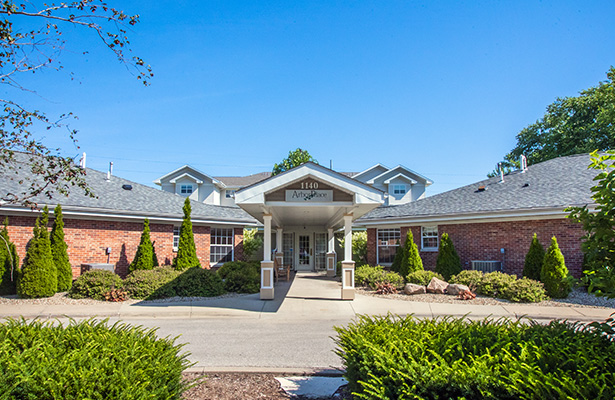 Each resident has a private room and is encouraged to personalize it with familiar items from home such as their bed, easy chair, lamps, TV, and decorations.
Recognized by the Alzheimer’s Association as a standard of care, this living arrangement maximizes the benefits for individuals facing cognitive losses.
As a state-certified facility, Arbor Place operates under the supervision of our Director of Long-Term Support and Services (LTSS) and a dedicated staff nurse. Specially trained employees are on hand 24 hours a day, maintaining an optimal resident-to-caregiver ratio. With overnight security staff and a campus nurse available seven days a week, we ensure that both residents and their families experience peace of mind around the clock.
When the time comes to talk about care for your loved one, contact us about Arbor Place at Meth-Wick Community.
14 comments
Comments are closed.