When most people think about moving into a senior living community, or helping a loved one through that transition, they picture the physical space: the apartment, the dining room, the level of care.
What they may not fully appreciate is the depth of the team that surrounds residents once they arrive. At Meth-Wick, the team includes nurses, care aides, wellness professionals, dietary staff, and many others who work together to support residents as whole people.
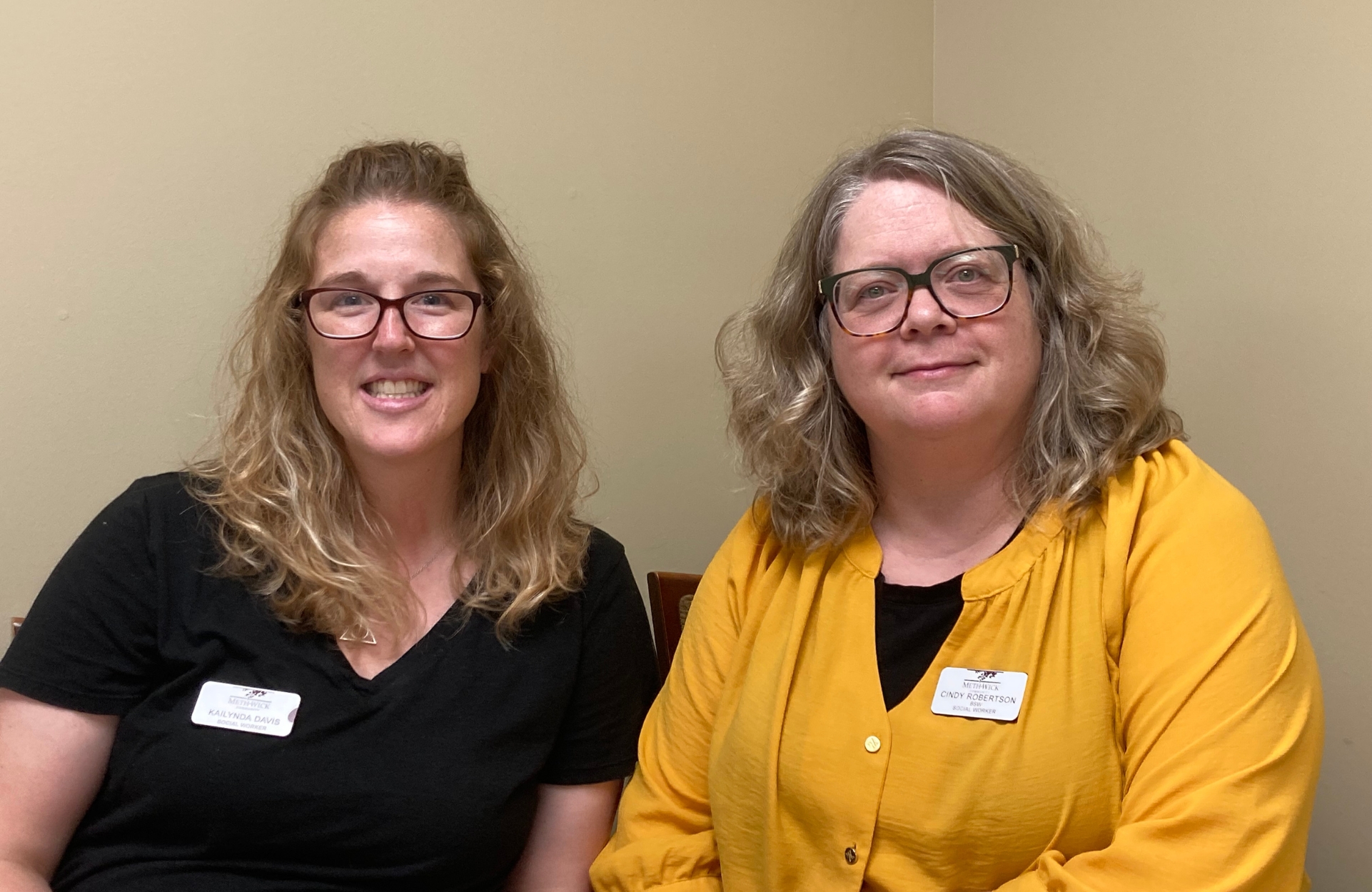
Social workers are an important part of that team, serving as connectors, advocates, and a consistent point of contact for residents and families throughout their time on campus. At The Woodlands, Meth-Wick’s skilled nursing community, that role belongs to Kailynda Davis. Cindy Robertson serves residents across independent living, assisted living, and Arbor Place memory care. Together, they bring decades of experience and a shared commitment to making sure every resident and family feels supported at every step.
What is a Social Worker’s Role in Senior Living?
Social work in a senior living setting spans more ground than most people expect. On any given day, a social worker might be helping a new resident adjust to their surroundings, connecting a family with resources, coordinating a care plan meeting, or simply being a steady, familiar presence when someone needs one.
At the core of it, the work is about people: understanding who they are, what they need, and making sure those needs are met even when circumstances are complex.
For Kailynda, whose work centers on skilled nursing, the role encompasses new admissions and discharge planning, care conferences, quarterly assessments, and ongoing support for residents and families as they navigate a new chapter. Every day looks a little different depending on what residents need most.
Cindy’s scope is broader in geography but no less personal. She meets with prospective residents before they even move in, conducting home assessments to understand their needs and preferences. Once they arrive, she stays connected, helping with service coordination, navigating questions about insurance and care options, and serving as a reliable point of contact for families near and far.
“We’re really just meeting residents where they’re at,” Kailynda says.
Decades of Experience, One Shared Mission
Cindy has been at Meth-Wick for 30 years, long enough to have watched much of the campus be built and to have supported two generations of some families.
She came to the field through a social work degree and internships with the Alzheimer’s Association and spent 28 of her 30 years at The Woodlands before transitioning to serve the broader campus two years ago. Her longevity at Meth-Wick reflects something she feels strongly about: this is a place where the mission is real.
“I’ve been here long enough that some of the family members of past residents now live here themselves,” she says. “That tells you something about what their loved ones experienced here — and that means a lot.”
Kailynda came to Meth-Wick through a background in hospice social work, with a minor in gerontology. She knew early on that senior care was where she was headed, and her time working alongside The Woodlands team before joining full-time made the fit feel natural. She brings that same commitment to every aspect of her work and to the staff she helps orient to The Woodlands’ culture of care.
Supporting Transitions: Before, During, and After
One of the most important functions a social worker serves is helping residents and families navigate transitions between levels of care. These moments, whether moving from independent living to assisted living or from assisted living to skilled nursing, can carry significant emotional weight.
Cindy approaches transitions proactively. When she begins to notice a change in a resident’s needs, she starts the conversation with the family early, encouraging them to learn about the next level of suggested care, sharing information about what the environments offer, and helping them to feel comfortable with what may lie ahead. Building that familiarity early makes the process feel more gradual when the time comes.
When a move to The Woodlands does happen, Kailynda and Cindy work together through joint meetings and walkthroughs of the space to give the resident and their family a sense of familiarity and involvement and to ensure the move is a supported transition.
“It’s a lot of touring The Woodlands, letting them pick a room if we have options so they feel like they have more control, and walking them through every step,” Kailynda says. “We want to be as supportive as possible through that process.”
Supporting Families Every Step of the Way
Family members often arrive with a mix of love, hope, and questions they’re not always sure how to ask. Navigating care options, understanding what to expect, and knowing who to call are all areas where the social work team plays an active role.
Both Kailynda and Cindy serve as guides through those conversations, helping families understand their options and feel confident in their decisions. When a loved one with dementia is adjusting to a new environment, families often need reassurance alongside information, and that’s something Kailynda and her colleagues are experienced in providing.
The social work team is also a steady presence for families who may be supporting a loved one from a distance. When family members live out of state, Kailynda and Cindy bridge that gap with regular communication, extra attention, and a level of personal investment that reflects Meth-Wick’s broader commitment to caring for residents and families alike.
“One of my favorite parts of the job is getting to learn someone’s story and share it with the rest of the staff,” Kailynda says. “It helps everyone understand who this person is and where they’re coming from.”
Honoring Each Resident as an Individual
In skilled nursing, care is coordinated through a formal, multidisciplinary process that covers everything from cognitive health and nutrition to recreation and daily preferences. Social work is a central part of that process, with a focus on ensuring each resident’s perspective is present and reflected in their care.
Person-centered care at Meth-Wick means honoring preferences that might seem small but carry real significance: the right to sleep in, to choose when to eat, to structure their day in a way that feels like their own. Social workers help translate that philosophy into everyday practice, reinforcing a culture where residents are seen as individuals with their own histories, preferences, and ways of living well.
What Social Workers Want Families to Know
Social workers are sometimes an unfamiliar presence to people who haven’t worked with one before. Part of what Kailynda and Cindy do is simply make themselves known, so that when a resident or family member needs support, they already have a face and a name to reach for.
“We’re here to help,” Cindy says. “We want people to feel successful here, and we want them to know they can come to us.”
Kailynda also wants families to know that skilled nursing at Meth-Wick isn’t necessarily a permanent destination. Discharge planning is a meaningful part of her role and helping residents return home or move to a less intensive level of care when they’re ready is something she takes seriously.
“A big part of my job is helping people get back home or to a lower level of care. If someone can be in assisted living, we want them in assisted living.”
Part of a Larger Team
Social work at Meth-Wick doesn’t happen in isolation. Kailynda and Cindy work alongside nursing staff, wellness and recreation, dietary, and the broader care team to make sure every resident is supported as a whole person.
That collaborative spirit is something Cindy comes back to often when she talks about how families feel more confident in their decisions and how transitions go more smoothly.
“We are a team. We want what’s best for the resident, just as families do for their loved ones. Being available, being open, and working together — that’s really the heart of it.”
Support at Every Step
At Meth-Wick, moving through the continuum of care doesn’t mean navigating it alone. Whether someone is arriving for the first time, facing a change in their needs, or just trying to make sense of a new chapter, Kailynda and Cindy are part of the support system that ensures no one has to figure it out on their own.
To learn more about life at Meth-Wick Community, contact us by phone at 319-365-9171 or use our online form to schedule a tour.