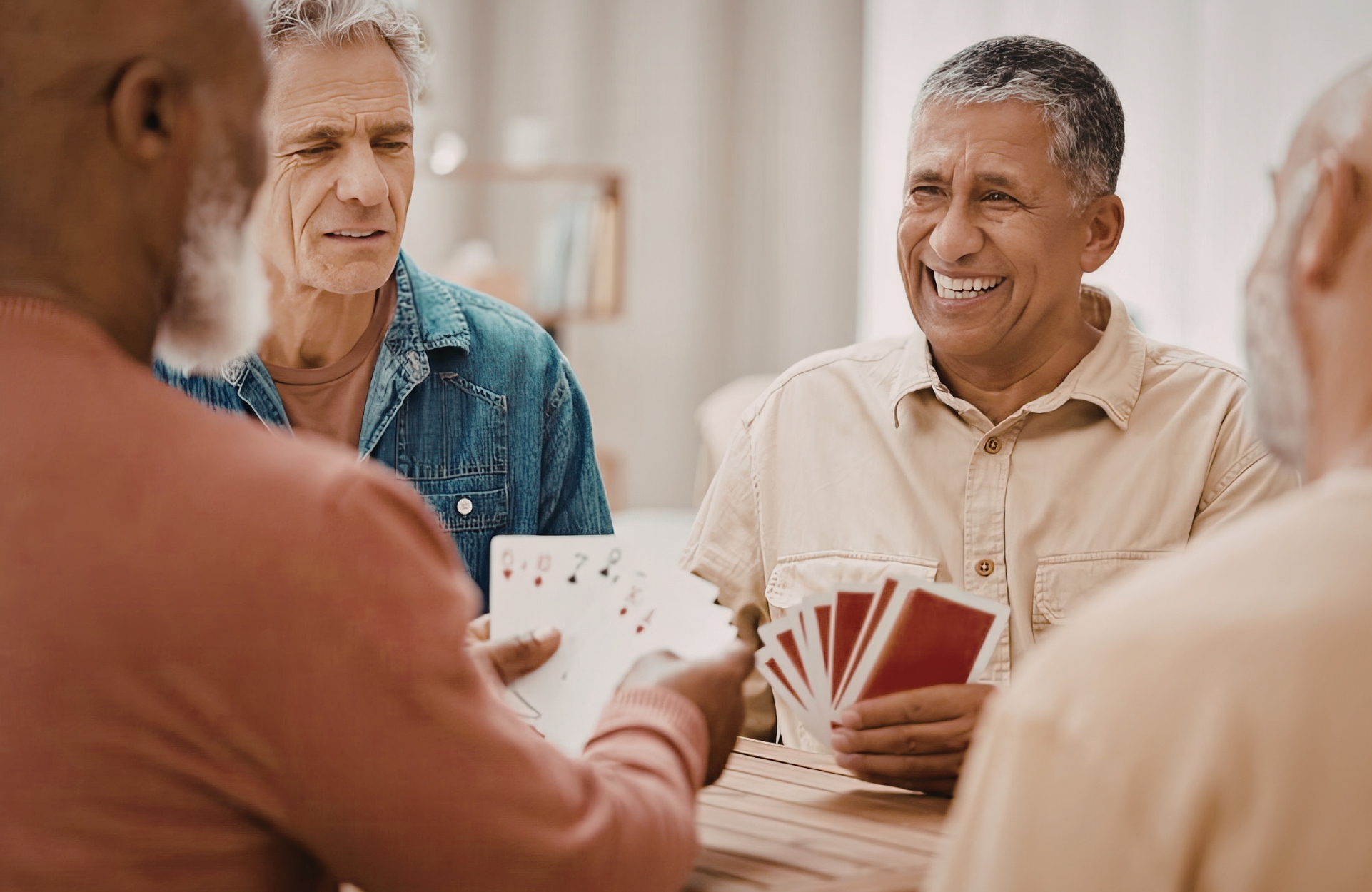
When people think about healthy aging, they often focus on physical health. Exercise, nutrition, and preventive care all play important roles in maintaining well-being. But another factor can be just as important: staying connected with others.
Whether it’s meeting friends for coffee, joining a discussion group, volunteering, attending an educational program, or sharing a meal with neighbors, social engagement plays a significant role in overall health and quality of life.
Research continues to show that those connections matter. According to the National Institute on Aging, loneliness and social isolation are linked to a higher risk of depression, cognitive decline, heart disease, and other health concerns. Staying socially engaged is about more than having something to do; it’s an important part of overall wellness.
At Meth-Wick, opportunities to connect are part of everyday life. Residents gather for clubs, classes, educational programs, volunteer opportunities, social events, and countless informal interactions that occur naturally throughout the community.
Few people see the impact of social engagement more clearly than Eryn Cronbaugh, Director of Wellness & Recreation at Meth-Wick. Working with residents every day, she and her team create opportunities for connection through wellness and recreation programming, events, and shared experiences that enrich life on campus.
More Than Just Staying Busy
It’s easy to think of social programming in a senior living community as entertainment or a way to pass the time. In reality, fulfilling social engagement provides something much deeper.
“One of the biggest misconceptions is that recreation programming is simply about keeping people busy,” said Eryn. “What we’re really creating are opportunities for connection, purpose, continued learning, and personal growth. Those experiences help people maintain the routines and relationships that give life meaning.”
Participating in a program, discussion group, class, or club can stimulate the mind, create a sense of purpose, encourage continued learning, and strengthen existing friendships while forming new ones. It gives people opportunities to share experiences, exchange ideas, and stay connected to the world around them.
As people age, maintaining those connections can become more challenging. Retirement changes daily routines. Friends and family members may move away. Health changes can make it harder to participate in activities that once came naturally.
That’s one reason community becomes increasingly valuable. Regular opportunities to engage with others help foster a sense of belonging and purpose that can contribute to both emotional and physical well-being.
Connection Through Shared Interests
One of the easiest ways for relationships to develop is through shared interests.
“Shared interests are often the starting point,” Eryn said. “Someone joins a fitness class, a discussion group, or a volunteer project because they’re interested in the group or project. Before long, they’re looking forward just as much to seeing the people they’ve gotten to know. That’s where real community begins.”
At Meth-Wick, residents connect in many ways. Some enjoy discussion groups that foster learning and conversation. Others participate in volunteer opportunities, fitness classes, games, creative pursuits, faith-based groups, or educational programs. Some programming brings together residents with similar interests, while others create opportunities to meet people they might not otherwise cross paths with.
What often begins as participation in a program or shared interest can become something more lasting. People discover common experiences, build friendships, and establish routines that become important parts of daily life.
The common interest may bring people together, but the relationships are often what keep them coming back. Whether it’s a long-standing discussion group, a fitness class, a volunteer project, or gathering with friends after an event, there is no single path to staying engaged—and that’s part of what makes community life so valuable.
The Value of Everyday Interaction
Not every social connection happens during a scheduled event or program. Some of the most genuine interactions are often the simplest: chatting with a neighbor while walking across campus, joining friends for lunch, stopping to talk after a program, or seeing familiar faces throughout the day.
These small moments create a sense of familiarity and connection. They reassure people that they are part of something larger than themselves and are surrounded by others who share similar experiences and interests.
Healthy Aging Includes Connection
There is no single formula for healthy aging, but one thing is clear: meaningful relationships continue to play an important role throughout life. Social engagement supports emotional well-being, encourages lifelong learning, and helps create a sense of purpose and belonging. It can enrich daily life in ways both large and small.
“Healthy aging is about much more than physical health,” Eryn said. “We want residents to continue doing the things they enjoy, discover new interests, and build meaningful relationships. When people have opportunities to stay engaged and connected, it supports their emotional well-being, gives them a sense of purpose, and enriches everyday life.”
At Meth-Wick, opportunities for connection are woven into community life every day. Whether through organized programs, shared interests, or simple conversations between neighbors, residents have countless ways to stay engaged, build relationships, and continue finding joy at every stage of life.
Because healthy aging isn’t just about adding years to life—it’s about continuing to find purpose, friendship, and fulfillment along the way.